
Take Part In HS2 Resident Survey
RSVP is carrying out this anonymous survey to understand how HS2 construction is affecting residents of Chelmsley Wood and Castle Vale.
Key points:
- We are not collecting names, addresses, email addresses or any information that can identify you.
- Taking part is voluntary.
- You may skip any question you do not wish to answer.
- Your responses will be combined with those of other residents and used to help evidence local need and shape community support services and funding applications.
- By completing this survey, you agree that your anonymous responses can be used for these purposes.
Thank you for your time and support.
Make your voice heard.
Survivors At The Centre: Our Talk With the Victims’ Commissioner
At the start of the first Victims Rights Week (September 21–27, 2026) by the West Midlands Police And Crime Commisssioner, RSVP and our sister organisation GINA had a great opportunity. We welcomed the Victims’ Commissioner for England and Wales, Claire Waxman OBE, and the West Midlands PCC Victims Advocate Natalie Queiroz, whose own lived experience gives a voice to many survivors of domestic abuse.
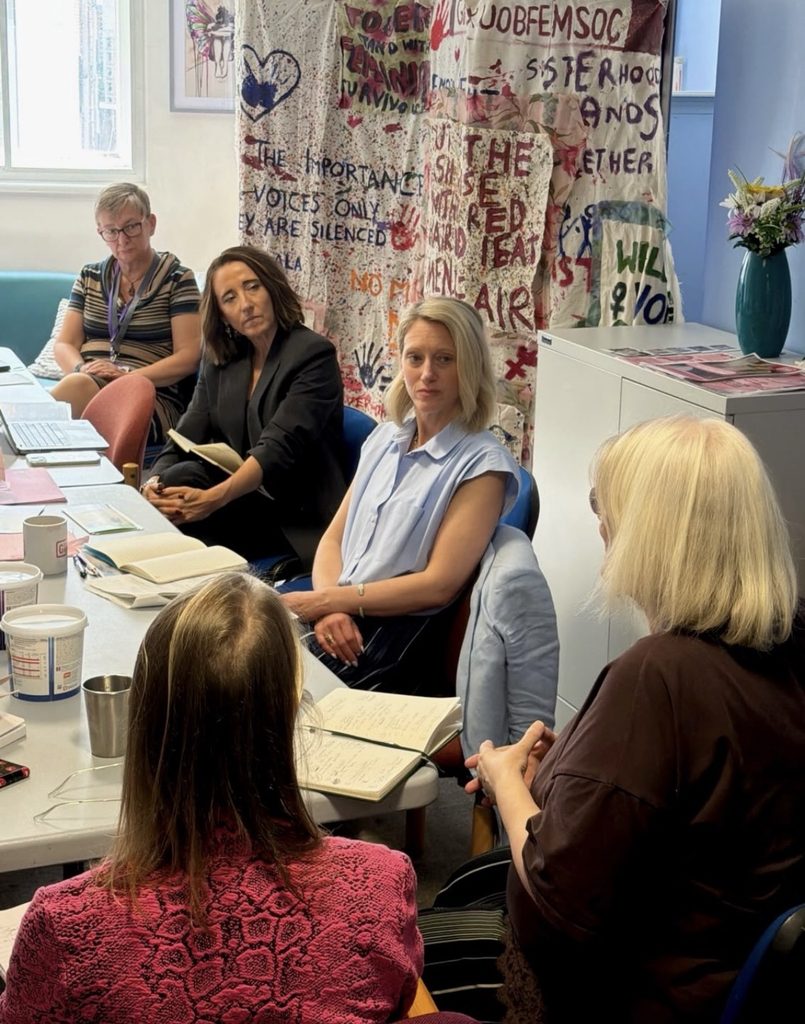
RSVP and GINA were incredibly honoured for the opportunity to present the lived-experiences of survivors of sexual trauma in Birmingham and Solihull. Together with some of our leadership team, Counsellors and Independent Sexual Violence Advocates (ISVAs), we spoke openly about the pressures facing specialist support services and the difficult journeys of survivors navigating the criminal justice system. Natalie highlighted her vital campaign driving awareness of victim rights across the region, while we focused on the reality facing survivors on the ground.
Just a few days later, the Government announced a series of reforms aimed at improving how rape and serious sexual offence cases are handled. The changes include fixed trial dates, specialist courtrooms for rape and serious sexual offences in every Crown Court across England and Wales, and better facilities for victims, including private waiting rooms and separate entrances.
These changes come in response to a system that, for too long, has failed many survivors. With rape cases taking an average of 424 days to reach Crown Court, it is unsurprising that many victims withdraw from the process before their case is heard. As Andy Burnham recently stated, victims of rape and serious sexual offences have felt “let down” by the justice system for far too long, and that this is NOT GOOD ENOUGH.
We see the personal, human impact of “not good enough” every day.
Behind every statistic is a person whose life has been placed on hold while they wait for justice. At RSVP, we have supported survivors who have waited as long as nine years from reporting an offence to seeing their case reach court. Others have faced repeated postponements, with trial dates moved multiple times or sentencing hearings delayed at the last minute.
Some survivors have arrived at court expecting the protections they were promised, only to be directed through the main public entrance and forced to fear coming in contact with the person accused of harming them. Others have felt unable to continue and have withdrawn from the process altogether.
These experiences can have a profound impact on wellbeing, recovery and confidence in the justice system.
However, we also see the difference that dedicated, specialist support can make. Our ISVAs walk alongside survivors throughout what is often a long and difficult journey, providing practical guidance, emotional support and advocacy at every stage.
We welcome these proposed reforms by the government, which offer hope that future survivors may face fewer barriers and less uncertainty. However, meaningful change will depend not only on policy announcements, but on their effective implementation. There is a need for a radical and urgent overhaul. We echo the concerns that Claire Waxman voiced in her open letter to the Prime Minister, stating: “As you prepare to set out your ten-year vision for the country through your Plan for Britain, I urge you to place criminal justice at its heart. Victims need more than assurances that the system will hold together.”
Survivors deserve a justice system that is timely, compassionate and trauma-informed. RSVP and GINA look forward to helping these changes ease survivors through improved criminal justice processes, and will continue working to ensure that every survivor’s voice is heard, supported and respected.
Raising The Bar: Are You Ready for the Changes to Workplace Harassment Law?
Since October 2024, employers have had a legal duty to take reasonable steps to prevent sexual harassment at work.

From 30 October 2026, that duty will be strengthened. Employers will need to take “all reasonable steps” to prevent sexual harassment, while new obligations will also protect workers from harassment by third parties such as customers, clients and members of the public.
But what does this mean in practice?
From reasonable to “all reasonable” steps.
There is no one-size-fits-all checklist. What is reasonable will depend on an organisation’s size, sector, resources, working environment and the risks faced by its workers.
Employers should be able to demonstrate that they have proactively identified risks and taken appropriate action. This could include:
· Risk assessments: Identifying potential hotspots, including lone working, power imbalances, alcohol at work events, customer-facing roles, travel, remote working and social media
· Policies and procedures: Ensuring anti-harassment, bullying, grievance and disciplinary policies are effective, current and communicated to all workers
· Training: Making sure staff and managers understand what harassment looks like, how to raise concerns and how to respond appropriately to disclosures
· Listening to workers: Using one-to-ones, staff surveys, exit interviews and other feedback to identify concerns and monitor workplace culture
· Clear reporting: Providing accessible reporting routes and responding to concerns promptly, fairly and sensitively, with appropriate safeguards against further harassment or victimisation
· Third-party risks: Considering how workers may be exposed to harassment from customers, clients, suppliers, contractors or members of the public.
The message is clear: prevention needs to be active, ongoing and evidenced — not simply a policy sitting in a handbook.
What changes in October 2026?
The Employment Rights Act 2025 will:
☑️Strengthen the preventative duty.
☑️Employers will need to take all reasonable steps to prevent sexual harassment of their workers.
☑️Introduce third-party harassment protections.
☑️Employers will have an obligation not to permit harassment of their workers by third parties.
☑️Increase the potential consequences.
Where a tribunal finds that an employer has breached the preventative duty following a successful sexual harassment claim, compensation can be increased by up to 25%.
These changes build on wider reforms, including stronger whistleblowing protection for workers who report sexual harassment, introduced in April 2026.
How can RSVP help?
The Rape and Sexual Violence Project (RSVP) provides free counselling and advocacy for survivors of sexual violence and abuse across Birmingham and Solihull. Our specialist training team also works with organisations to help prevent sexual harassment and create safer, more inclusive workplaces.
Support can include:
Policy review and gap analysis – reviewing existing policies and procedures and identifying areas for improvement.
Workplace risk assessments – helping organisations identify higher-risk roles, environments and situations and develop practical action plans.
Tailored training – providing staff, manager and leadership training on harassment, bystander intervention, responding to disclosures and creating positive workplace cultures.
Reporting and cultural audits – reviewing reporting systems, consulting with staff and helping organisations identify and address cultural or systemic concerns.
Counselling support – through RSVP’s sister organisation, GINA, counselling packages can also be arranged for employees affected by sexual violence and harassment.
The RSVP team has supported organisations including Birmingham Women’s and Children’s Hospital, Aston University, West Midlands Business Festival, the Solicitors Regulation Authority, BHSF, Colmore BID and Safer Dance – Night Time Economies Project.
Income from RSVP’s consultancy and training services helps fund its vital counselling and advocacy services.
Scan the QR code or click here to see all our upcoming training sessions.
Is your organisation ready?
The move from “reasonable steps” to “all reasonable steps” is more than a change in wording. It is a prompt for employers to look closely at their workplace culture, understand where risks exist and make sure prevention is embedded in everyday practice.
RSVP can help you understand the risks, strengthen your approach and build safer workplaces.
For more information, contact trainer@rsvporg.co.uk
Thank You Curry for Charity: The Taste of Giving


In July, we were delighted to hear from Fiza and Kamran, the kind souls behind Curry For Charity. For many years, they have been supporting local and national causes, using their love language of food to do good and raise money for essential services.
Within a month, the fantastic team put together the fundraising event in support of RSVP: a heart-warming evening of delicious curries and community spirit. The taste of giving can fill every soul!

Fiza believes that food is such an underrated tool to bring together communities, to break and overcome barriers that continue to fracture our society right now.
“We started doing Curry For Charity 14 years ago, when we hardly had anything ourselves, but we didn’t let that weigh us down. We always knew we want to give back to the community in some way and we are achieving that with our love language: Food,” Fiza said.
People like Fiza and Kamran bring hope in every plate. And we feel so honoured to have them champion our cause!
We have raised £200 in support of survivors! That means 20 children can have toys or therapeutic resources to help with their healing. Or we can fund travel tickets for 36 adults so they can access our vital support services.
A big thank you to all who joined us for a wonderful dinner and helped us raise funds during such a difficult funding period in RSVP. To know more about our funding situation, check out our Recovery Appeal.
Every pound shows that survivors have a safe space, with RSVP.
Jo’s 100 Miles Dog Walking Challenge
Strengthening the RSVP Recovery Appeal is the 100 Miles Dog Walking Challenge by our dear supporter and colleague, Jo.
Joanne has taken on a brilliant challenge with her two paw-some buddies Pablo and Alfie. They are walking across various locations in the West Midlands and Wales over the month to complete a hundred miles in support of RSVP.
The challenge is running every day throughout July, with miles being added daily, on her page below.

We’re so grateful for her dedication (and her four-legged companions too!). Together, they’re putting in the miles to raise both funds and awareness for our work.
If you want to consider taking on a challenge of your own and raise funds for RSVP, we’d love to make it happen! Write to us at info@rsvporg.co.uk today.
Update: Extension due to Heat Wave
The red weather alert and high temperatures are impacting everyone in the UK, including Jo and her loving pets. That’s why the 100 Miles Dog Walking Challenge has to be paused till the weather cools down.
Read Jo’s update in her own words:

We thank Jo for sticking through this tough time, and will keep supporters posted when they are back on the walks again!
September will offer a pleasant weather to join Jo for the last few miles of the challenge. Keep a look out for her invitaton to join the trio for the final walks. Please come along, if you can, to help Jo finish strong.
Update: The RSVP Recovery Appeal Going Strong
Everyone from RSVP, and the survivors we stand alongside with, are deeply grateful for your continued support. Whether you’ve been with us for years or have only recently joined our community, thank you for choosing to stand with survivors of sexual violence.
Your solidarity strengthens our work and reminds survivors that they are not alone.
Two Months of Impact
In June, we launched our RSVP Recovery Appeal to recover from our funding crisis. We aimed to raise £5,000 by August to rebuild our vital services, and we’ve been overwhelmed by the response so far.
Thanks to your kindness and support, we’ve now reached 70% of our target. This is a fantastic milestone and a testament to the strength of the community standing alongside us, for survivors.
A big thank you! We truly couldn’t do this without you.

Extending The Appeal
Due to your generous support, we are now extending our appeal for one more month. We are very close to our goal, so let’s reach the finish line together.
If you’ve already donated, thank you. If you’ve been considering making a gift, now is the perfect time. We look forward to turn this 70% into 100%. Together, we can make our recovery a reality.
Some of our dearest supporters have taken by their own ways to fundraise in support of our Recovery Appeal. For instance, check out the 100 Miles Dog Walking Challenge by Jo here.
If you also have something in mind to support RSVP, we’d love to work with you! Write to us at info@rsvporg.co.uk today.
Important Update: A Message from Our CEO, Lisa
In this update, I have some difficult news to share with you and I want to speak to you directly and honestly.
The last few months have been the most challenging and destabilising time at RSVP.
We’ve been hit by a deepening funding crisis, at the same time as more survivors than ever have reached out for our support.


Demand for RSVP services has risen sharply, costs have increased and we have had to make painful, difficult decisions to protect RSVP’s survival.
These decisions have affected survivors, our dedicated team and the survivor community.
The Decisions We Have Made So Far
• Closed two of our services: our long-running social wellbeing groups, established in 2008, and our Sex Worker ISVA Service, established in 2017.
• Reduced other services, including pausing new referrals into our Adult Counselling Service from April.
• Made changes to our Independent Sexual Violence Advocacy (ISVA) Services, as ISVA/Advocates have caseloads higher than they should be. This is impacted by survivors being forced to wait longer for justice, due to the years that they wait for a court date, meaning they need ISVA support for longer.
These decisions affect real people, survivors who have finally reached out, and our dedicated team who give everything they have to this work.
All while, every single day, we continue to see the power of RSVP’s specialist support.
🙍🏽♀️Why We Keep Going: A Survivor’s Words
This is our why and why RSVP exists.

This is why we are determined to recover and rebuild.
For survivors 💜
🚀Launching Soon…
In June, we will launch something important for survivors, so do look out for more information in our next newsletter.
Its focus will be to:
• Start to rebuild our core services, and ensure that RSVP continues to stand with child and adult survivors, from Birmingham and Solihull.
• Rebuild hope, strengthen the survivor community, and ensure survivors are not alone.
Stay Connected: Join Our New WhatsApp Channel ✅
We have now launched a new WhatsApp Channel where you can follow:
- Real stories of impact.
- Behind-the-scenes insights.
- Updates on survivors’ needs.
- Ways to get involved with RSVP 🫱🏽🫲🏻
It’s a simple way to stay close to the work you care about. Scan the QR code or click the button below.
Other Ways to Help 🤗
We know that our supporters like to support RSVP, in many different ways.
This is why we have created a variety of meaningful ways to support survivors using what you already have:
• Corporate connections: Can you introduce us to your workplace CSR team or suggest RSVP as a charity partner?
• 🥿👚📱Fundraise with what’s at home: Can you sell or donate items you no longer need? Look out soon for information on our new schemes where if you donate good quality second-hand bras and smart phones (and other tech) to RSVP, it could raise funds for us.
• Share our messages: Can you share and help us use our voice and survivors’ voices to help us reach new people, who may never have heard of RSVP.
• Champion our work: Can you talk about why specialist support matters, especially now? 🗣️
Every single action strengthens RSVP’s support, care and community around survivors.
Looking Ahead With Determination 🌟
This is a tough moment, for survivors, for our dedicated team, and for RSVP. However, we believe it can also be a moment of change, connection and hope. RSVP has always been built on people who show big-hearted, bold, belief in survivors. These values will carry us through this period of recovery.
Thank you for caring, for continuing to support survivors and for standing with us.
With gratitude,
Lisa Thompson
CEO, Rape and Sexual Violence Project.
⚠️Office Closure- January 2026
The weather is taking a severe turn, and now there is an amber weather warning across the region. Storm Goretti might make travelling quite difficult due to snowfall predictions, and that’s why RSVP has made the decision to temporarily close our office till normal weather returns.

Here are the dates to keep in mind:
a. Office closed from Thurs 8th Jan, 2pm onwards, after which our team will work from home.
b. Office closed all day on Friday, 9th Jan, with our team working from home. This is a precaution, since the amber warning extends to Friday morning and could impact safe travel.
c. Office open on Saturday as usual, unless the current predicted weather changes. We will send further updates if anything changes.
We are in the processing of contacting clients, due to be seen in person (at our main premises, outreach, schools etc. and from 2pm today or tomorrow) to inform them to stay safe, not to travel & to be offered an alternative phone session instead. For younger children we will offer carers/parents a check in instead.
Please look out for a message on your email or phone to update you. Already booked phone appointments will generally continue as planned.
Although this is a change to how we support clients, we want to ensure that survivors, our team and colleagues can avoid travel during an amber warning, and stay safe. This is our priority.
For any questions or assistance, please get in touch with us via email: info@rsvporg.co.uk
Our Take On UK’s Violence Against Women and Girls (2025- 2030)
At RSVP, we welcome the Government’s recently published Violence against Women and Girls (VAWG) Strategy. We are relieved it has finally been released, following several postponements, making it long overdue. We are relieved, because actions to reduce and respond to VAWG are needed now more than ever.
Growing numbers of children and adults require specialist support from organisations like RSVP. Yet, despite us being open 7 days a week, the need for support is growing faster than our service capacity, resulting in survivors facing more distress as they wait even longer for support. The need for an ambitious strategy is clear and urgent. However, long‑term ambitious goals must not ignore the rapidly widening gaps in specialist support that require attention and action now.
Key Concerns about the VAWG Strategy
- Education alone cannot counter the scale of pornography harms:
Expecting parents, carers and teachers to offset the influence of multi‑million‑pound porn platforms, designed to push violent, misogynistic content to children, is unrealistic. We need stronger action on the platforms themselves and a society that stops profiting from the sexualisation of women and girls. Young people also need ongoing, specialist‑led reflective spaces to explore and unpick what they’ve seen. Evidence‑based programmes, like Time to Talk delivered by Safer Together and other by the specialist sector, must be prioritised. - Teachers are not specialists, and cannot be expected to carry this work alone:
Improvements to Relationships, Sex and Health Education (RHSE) are welcome. However, disclosures, trauma and creating safety for young people to have complex conversations requires specialist skills and survivor‑informed practice. Properly funded specialist services must work alongside schools, supporting already overstretched teachers, who are not fully trained to respond to abuse and misogyny. - NHS referral expansion without resourcing specialist services will lead to increased distress for survivors:
Health already refers around a third of survivors into specialist organisations like RSVP. We are concerned that rolling out “Steps to Safety” nationally will increase referrals to our sector even further, with no additional resource provided to meet this rising demand. Without investment, survivors will simply face longer waits and experience greater distress. - Commitment to provide “holistic, tailored support” can only happen with long‑term funding:
The Strategy sets out a vision for a coordinated, responsive system over the next decade. Without secure, ring‑fenced funding though, these commitments will remain aspirational, and fail to become reality. Survivors need support now, they cannot wait years for a system that works. - Children under 16 are missing from the Strategy’s headline measure of VAWG:
The goal to halve VAWG relies on data that excludes children under 16, despite high numbers being subjected to sexual abuse in childhood. This omission risks masking the true scale of abuse, and leaves a significant group of children invisible in national targets. - Child sexual abuse (CSA) survivors are still waiting for the promised “standalone response”:
The Strategy acknowledges that CSA requires its own specialist approach, yet provides no timeline. After years of delays in implementing the Independent Inquiry into Child Sexual Abuse.
Our Final Thoughts:
Investment in the specialist sexual abuse sector is long overdue and essential. For decades, services like ours have been asked to do a lot with very little. Now, more than ever, we are being stretched beyond capacity. During Covid, additional funding recognised our work as vital and an emergency service. Now, we need the same level of prioritisation again if we are to avoid letting survivors down.
Proper funding means we can respond well, reduce distressing delays and ensure every survivor gets the support they need, when they need it, in order to rebuild their lives with hope and confidence after sexual abuse.
Office Closed on Nov 6, 2025
Since the wellbeing of both the children and adults we support, and our team are at the centre of all we do, our Birmingham City Centre premises will be closed all day on Thursday 6th November.

This due to there being a risk of unrest, trouble and protests in the city centre, before the evening’s football match. This is a very cautious approach, but clearly centres everyone’s wellbeing, for the whole day and evening.
Counselling and ISVA support will still continue, with city centre appointments changing to on the phone or online. Our schools and our outreach counselling locations will go ahead as normal and are unaffected.
Thank you for your patience and sorry for any inconvenience causes.