
Government’s Prisoner Early Release Scheme: What Does It Mean for Survivors?
It has been another challenging month for survivors, many holding their breath as the first roll outs of prisoners took place under the Government’s Early Release Scheme.
Under the Sentencing Act 2026 early release scheme in England and Wales, the government’s earned progression model offers qualifying prisoners earlier release, serving less than half of their prison sentences. This is a very concerning and drastic measure to tackle prison overcrowding, leaving many survivors feeling disheartened and in fear.
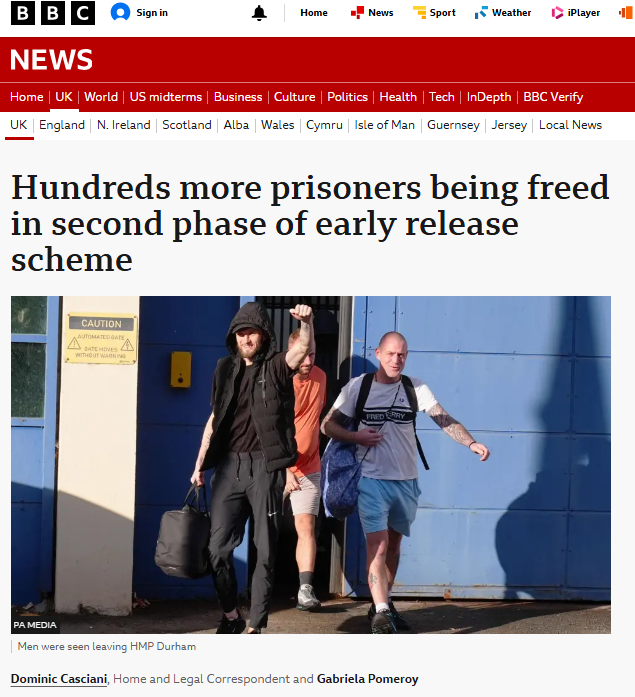
Around 5,000 prisoners are scheduled to be released in our communities, which was originally 6,000. Rigorous campaigning from ministers and survivor groups have led to the exclusion of people serving sentences for rape, serious child sexual and other grooming offences.
The Government promises that safeguarding measures like licensing conditions and monitoring, such as real-time GPS ankle tagging, are in place. Wider reforms were also introduced to increase supervision in the community and survivor support services. However, we are not the only survivor group who still have grave concerns.
What This Means For Survivors
For many survivors, sentencing represents more than punishment. It can provide a sense of acknowledgement, accountability and safety. That is why news headlines about offenders being released earlier than expected can be distressing, particularly for those who have worked hard to rebuild their lives after abuse.
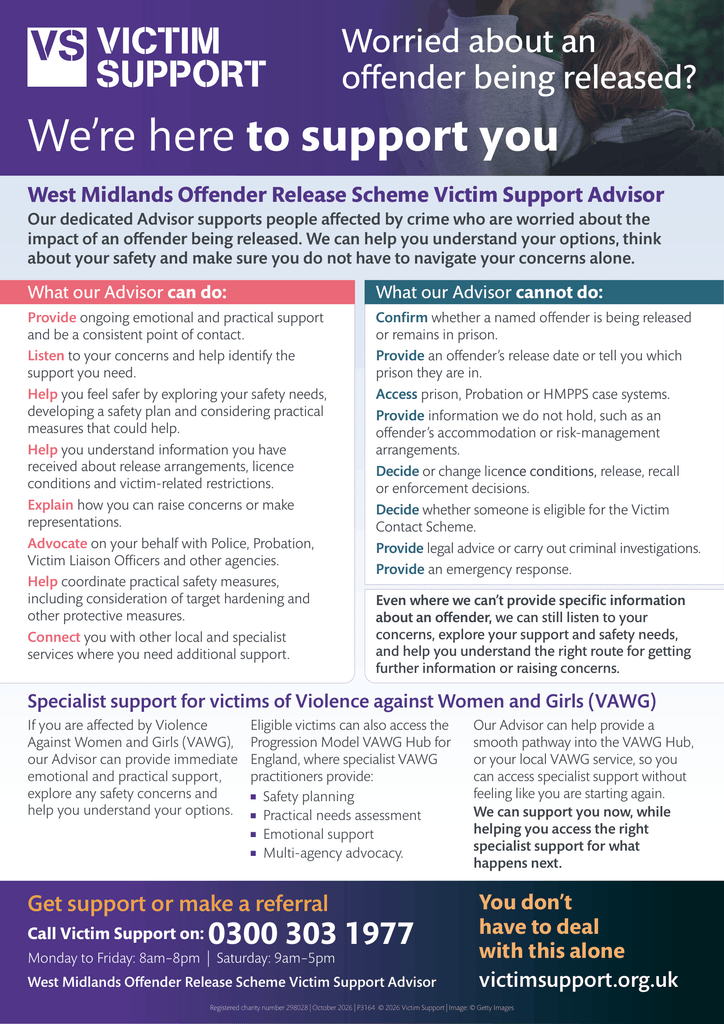
Survivors impacted in the West Midlands can ring the West Midlands Offender Release Scheme Victim Support Advisor on 0300 303 1977.
Nationally, anyone seeking help can contact the Government’ dedicated Victim Support: Offender Release Helpline. Access emotional support, practical advice, and understand what support may be available to you.
Phone: 0808 168 9280
Monday to Friday, 9am to 5pm (excluding bank holidays).
Further details can be accessed online via www.victimsupport.org.uk/offender-release-helpline/
What should survivors do if they are concerned?
If you are worried about an offender’s release, there are practical steps you can take:
1. Speak to your support worker or ISVA
An Independent Sexual Violence Advocate (ISVA) can help you understand what information is available and what safety measures may apply.
2. Check whether you are registered with victim notification services
Some victims are entitled to receive information about release dates and licence conditions through victim contact arrangements. Learn more about the Victim Contact Scheme here.
3. Report concerns immediately
If an offender attempts contact, breaches license conditions, or causes concern for your safety, report this to the police and relevant authorities as soon as possible. For life-threatening emergencies, please call 999.
Our Message to Survivors
We understand that discussions around early release can feel frightening, frustrating, or deeply unfair.
Every survivor deserves to feel safe, informed and supported. You do not have to carry these concerns alone.
We are working tirelessly to voice survivors’ lived-experiences from our region, advocating for better support from the Centre. Whilst this scheme will aid in reducing prison overcrowding, we have grave concerns about survivors’ safety now and in the future.